Labs

Interactive labs

Interactive explainers for subsurface concepts. Change the rock, drill the well, and see what happens. They run in the browser with nothing to install.

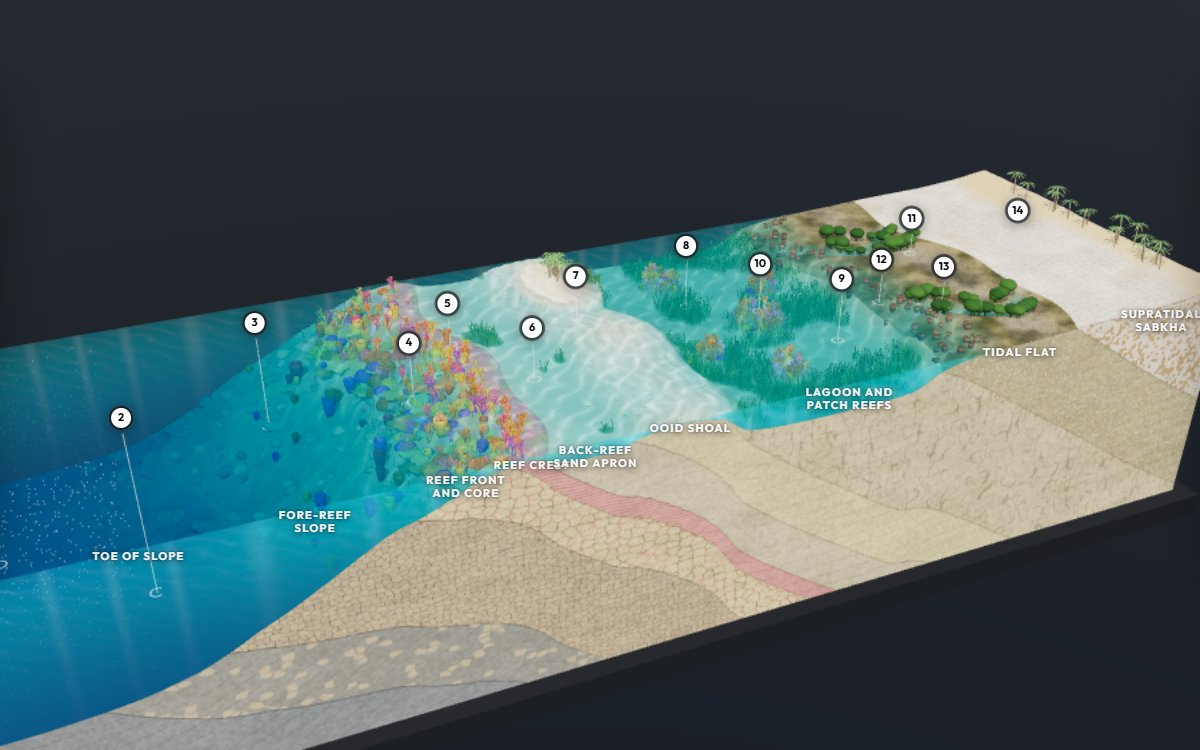
3D · CARBONATE GEOLOGY
WHERE LIMESTONES ARE BORN

Carbonate Lab

A tropical carbonate platform, cut open in 3D. Fourteen limestones and dolostones form in place from the basin to the salt flats. Watch each one form, turn a hand specimen, study its thin section under the microscope, and name it with Dunham and Folk. Then change sea level, or follow a rock down through burial.

  • Where does it form? Reef, lagoon, ooid shoal, tidal flat or sabkha: each pin is a different rock.
  • What is it called? Dunham and Folk names worked out from the thin section itself.
  • What happens next? Sea-level change and diagenesis, from highstand to deep burial.
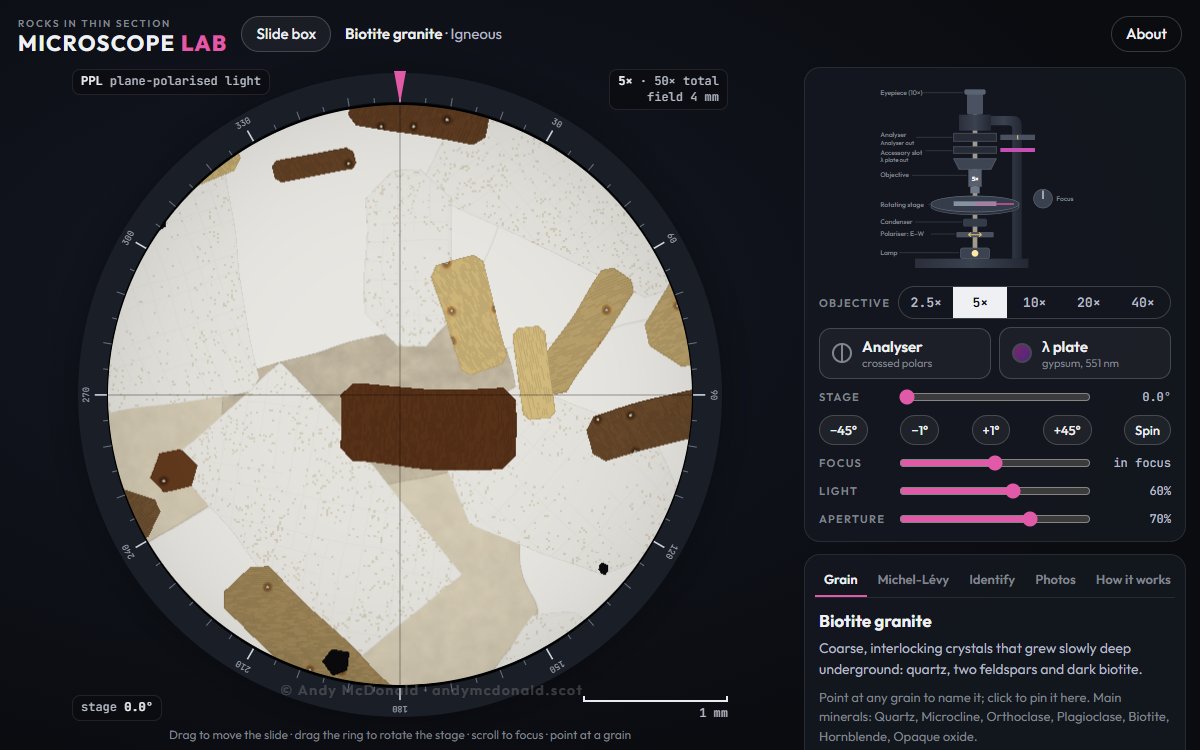
2D · PETROGRAPHY
ROCKS IN THIN SECTION

Microscope Lab

A petrographic microscope in the browser. Load a thin section, swap objectives, put the analyser in, slide in the gypsum plate and turn the stage, and watch each crystal's interference colour and extinction change, calculated from the optics. Point at any grain to name it, then try identifying minerals yourself.

  • Twenty-one slides. Sandstones, granite, basalt, gabbro, schist, evaporite and fourteen carbonates.
  • Real optics. Interference colours from retardation and a Michel-Lévy chart that follows the stage.
  • Identify it. Relief, colour, cleavage, birefringence, extinction and twinning narrow the candidates.
3D · ROCK PHYSICS
A SANDSTONE, OPENED UP

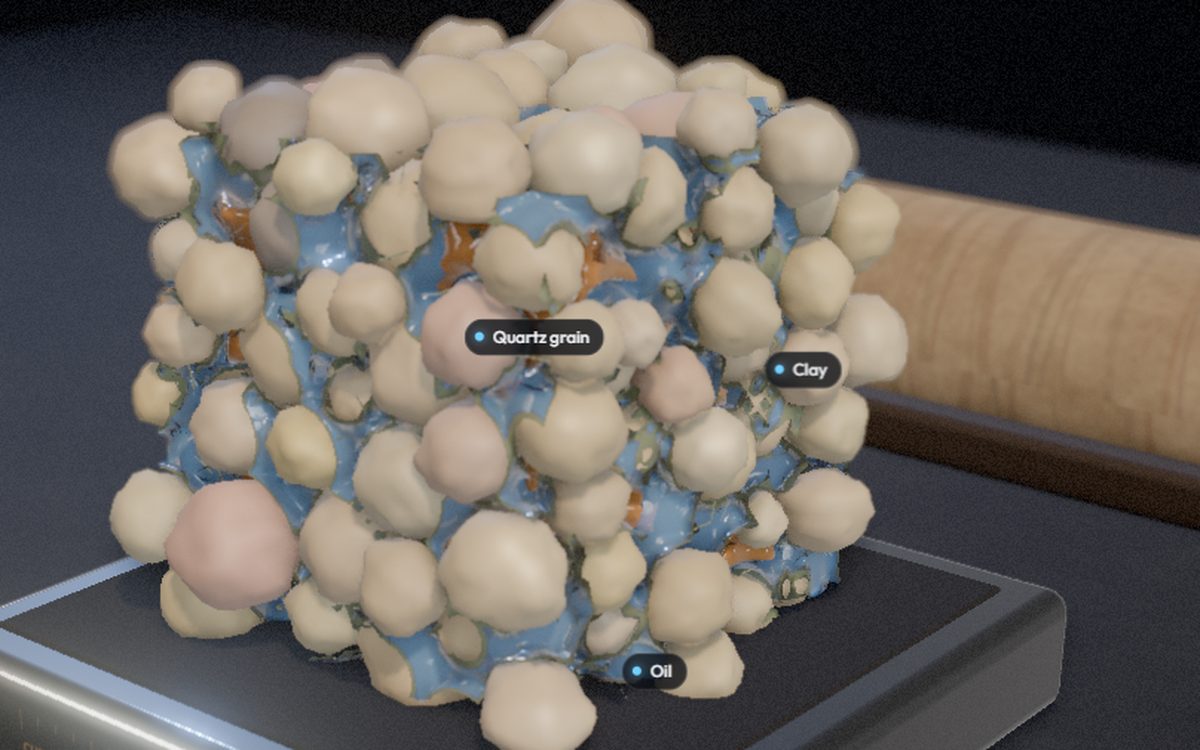
Pore Lab

A magnified cube of reservoir sandstone. Change the porosity, grain size, clay and water saturation and watch the grains, water films and oil or gas rebuild in front of you, then slice through it or pull it apart into its bulk volumes.

  • How much space? Porosity is the room between the grains.
  • How much of it is hydrocarbon? Water clings to the grains; oil or gas sits in the pore centres.
  • How easily does it flow? Narrow pore throats slow it far more than lost porosity does.
3D · LOGGING WHILE DRILLING
LOGS, AS THEY ARE MADE

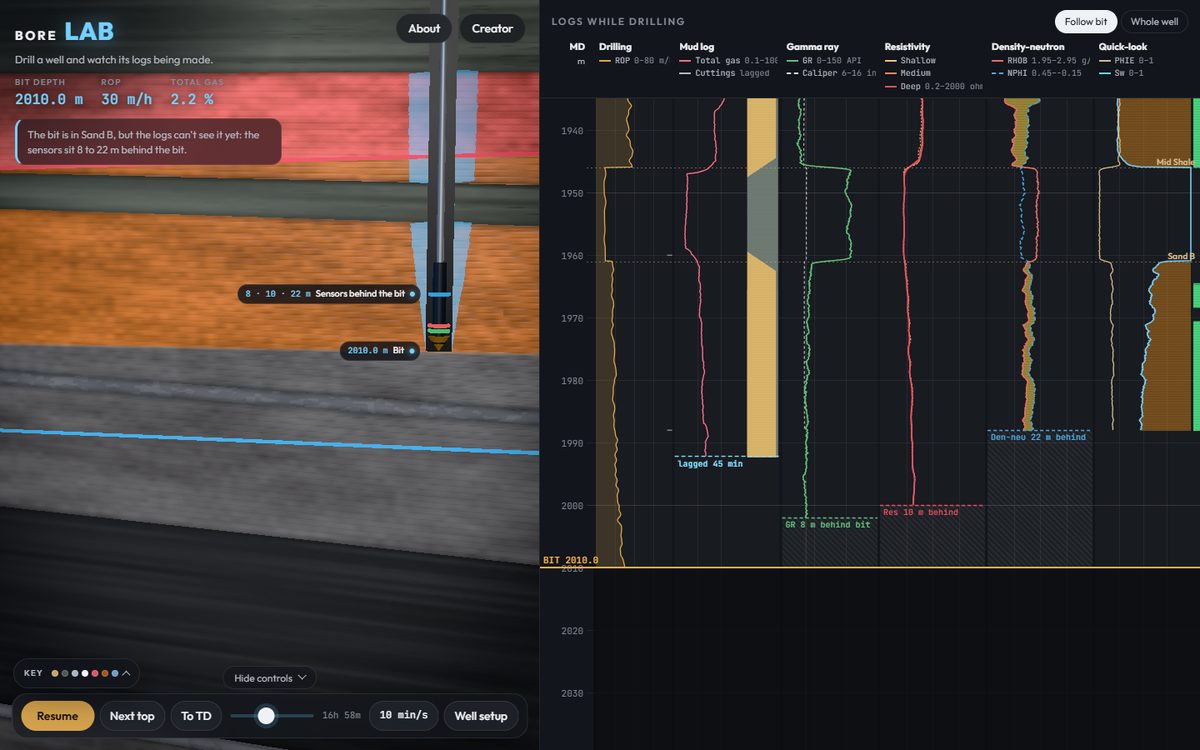
Bore Lab

Drill a well and watch its logs being made. Sensors trail the bit, gas and cuttings take time to reach surface, and mud filtrate creeps into the rock as you drill, so you can see why a log depends on when it was run.

  • Sensors trail the bit. Gamma ray, resistivity and density each sit metres behind it.
  • The mud log lags. Gas and cuttings reach surface tens of minutes after the rock was drilled.
  • The rock changes as you watch. Filtrate invades sands and shales wash out.
3D · LOGGING TOOLS Work in progress
INSIDE THE LOGGING TOOLS

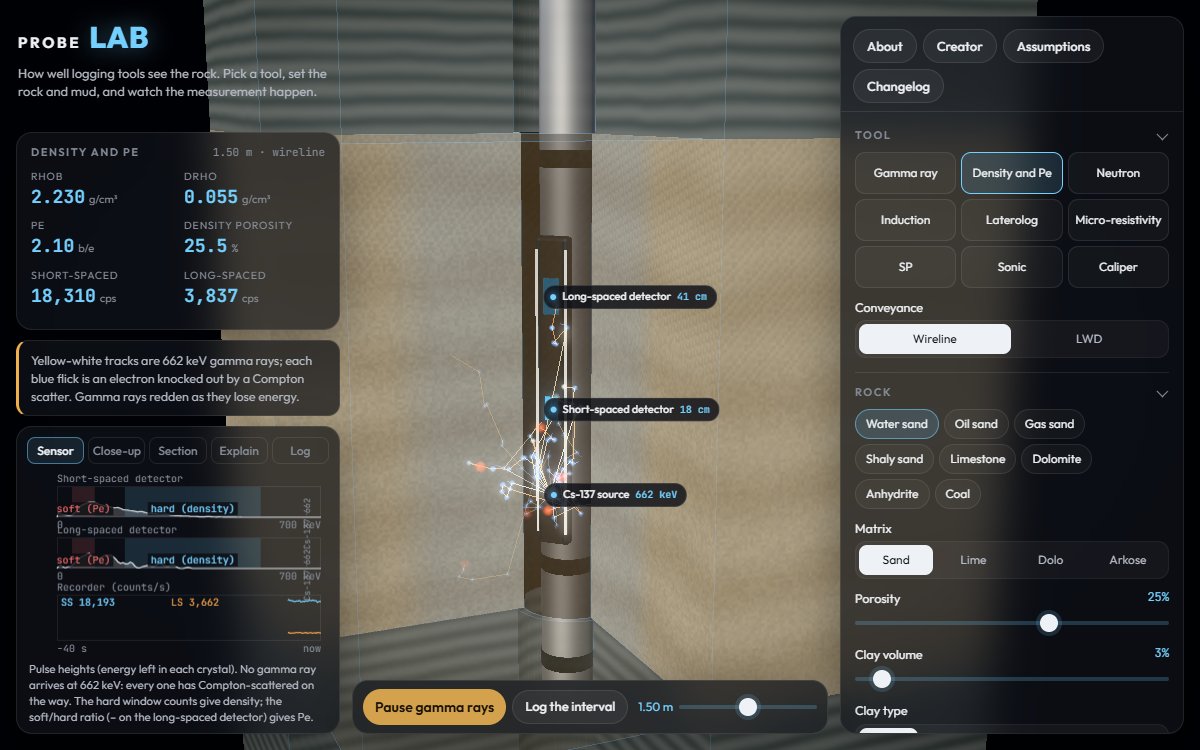
Probe Lab

Put a logging tool in a cut-away borehole and watch it measure. Gamma rays scatter, neutrons slow, currents flow and sound waves travel through the rock you set, so you can see what each tool responds to and what fools it.

2D · MACHINE LEARNING
MACHINE LEARNING ON WELL LOGS

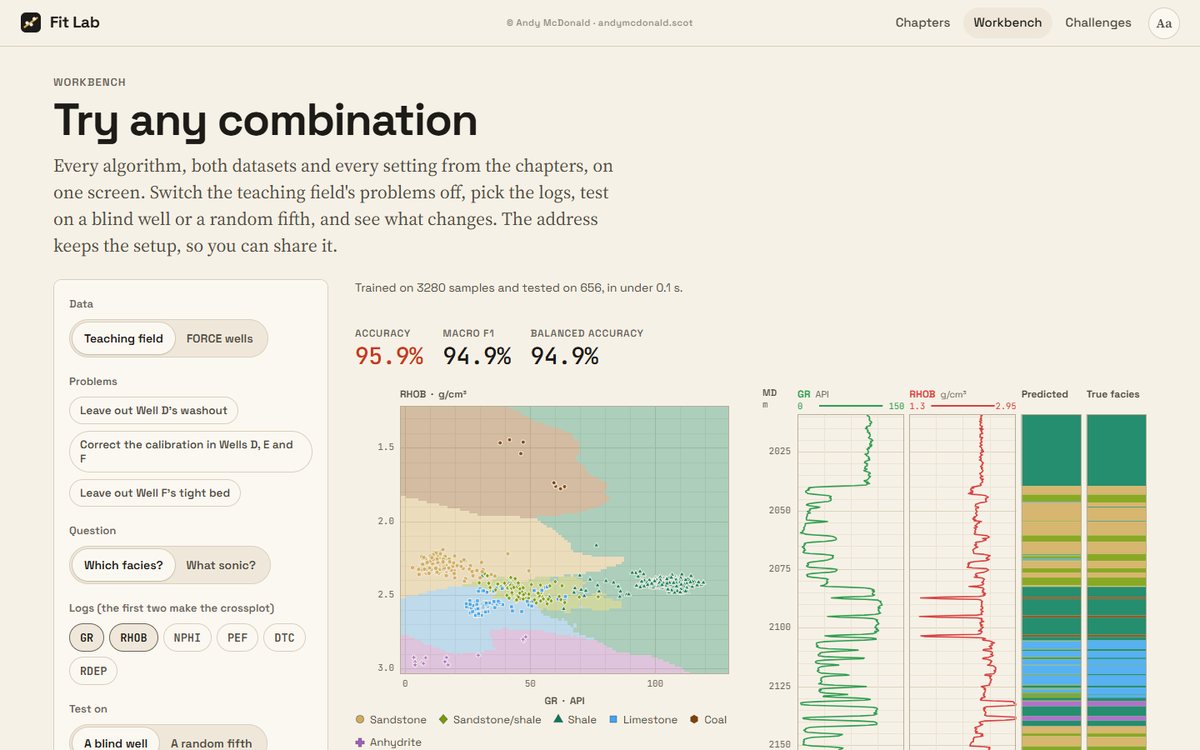
Fit Lab

How machine learning algorithms learn from well logs. Try each task by hand, then watch the algorithm do it step by step, across ten chapters, a workbench and five challenges on real FORCE 2020 wells.

  • Try it first. Group the samples or draw the line yourself, then see how the algorithm does.
  • Ten algorithms, in order. From k-means and regression to random forests, neural networks and isolation forests.
  • Real wells. Every chapter runs on the FORCE 2020 wells as well as a teaching field.